
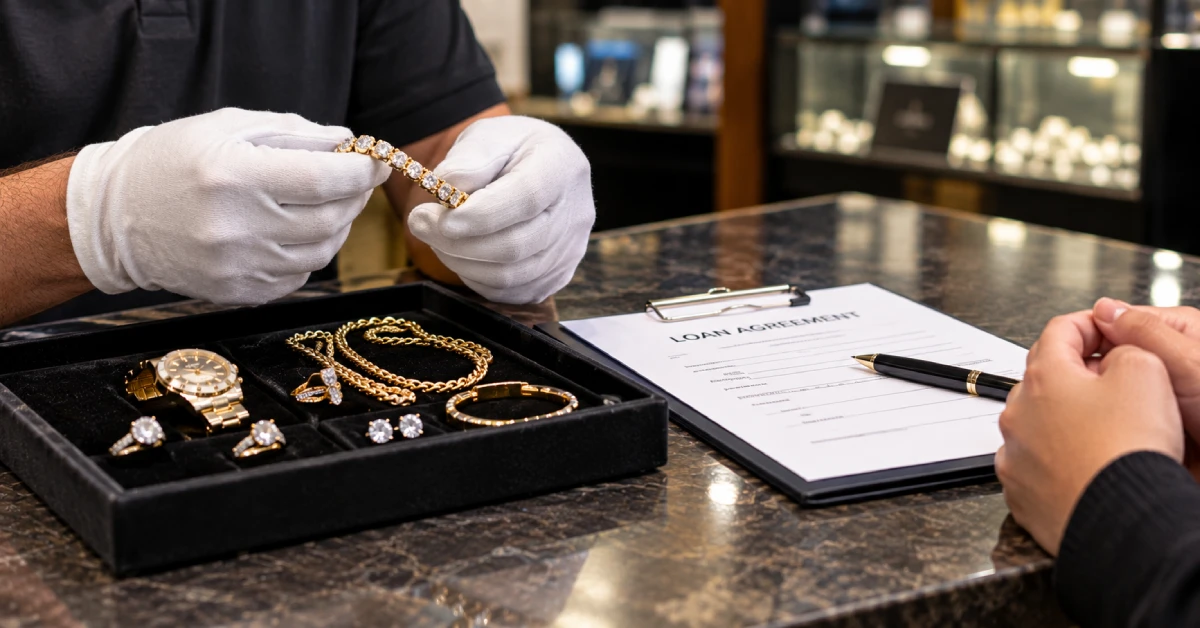
Yes. Jewelry can often serve as collateral for a loan, depending on the type of jewelry, its value, condition, authenticity, and the lender’s or pawn shop’s policies.
Instead of selling the item permanently, you use it as collateral for a loan.
The shop holds the jewelry while the loan is active. If you repay the loan on time, you get the jewelry back.
This can be useful if you need cash but do not want to permanently part with something valuable.
What Does It Mean to Use Jewelry as Collateral?
Collateral is an item of value used to secure a loan.
For example, imagine you own a gold bracelet worth a meaningful amount of money.
You may have two choices:
- Sell the bracelet and give up ownership
- Use the bracelet as collateral for a loan and keep the opportunity to recover it later
With a loan against jewelry, the item remains with the lender until you repay the loan according to the agreement.
What Types of Jewelry Can Be Used as Collateral?
Accepted items vary from one business to another, but common examples can include:
- Gold rings
- Diamond rings
- Engagement rings
- Wedding bands
- Gold bracelets
- Gold necklaces
- Gold chains
- Earrings
- Estate jewelry
- Platinum jewelry
- Diamond jewelry
- Luxury watches
Higher-value items with established resale demand may be easier to evaluate. You can also see what pawn shops buy to get a broader idea of accepted items.
Can You Get a Loan Against Gold Jewelry?
Yes, gold jewelry is commonly used as collateral. A lender may consider:
- Gold purity
- Weight
- Condition
- Design
- Brand
- Diamonds or gemstones
- Current market demand
For example, a 14K gold chain and an 18K gold chain may be evaluated differently because the gold content is different. Preserving quality estate pieces is often a priority, so a collateral loan can be an ideal way to keep fine gold jewelry intact instead of selling or melting it down.
Can You Borrow Against a Diamond Ring?
Potentially, yes. Lenders may evaluate diamond rings based on both the diamond and the setting. Factors may include:
- Carat weight
- Cut
- Color
- Clarity
- Shape
- Certification
- Metal type
- Brand
- Overall condition
If you have a grading report or appraisal, it can be useful to bring it with you.
Can You Borrow Against a Necklace or Bracelet?
Yes, necklaces and bracelets may also be eligible. The shop may evaluate:
- Precious metal content
- Weight
- Brand
- Condition
- Stones
- Design
- Resale potential
A signed designer bracelet may be evaluated differently from a generic gold bracelet of similar weight.
Can Luxury Watches Be Used as Collateral?
Some luxury watches may qualify for collateral-based loans. Examples can include recognized brands such as:
- Rolex
- Omega
- Cartier
- Breitling
- Tudor
- TAG Heuer
The exact value depends on the individual watch. If you’re weighing your options, see whether it makes more sense to pawn or sell a luxury watch.
A lender may look at:
- Model
- Reference number
- Condition
- Authenticity
- Original parts
- Box and papers
- Current resale demand
How Is Jewelry Valued for a Loan?
No single formula applies to every piece. The evaluation may consider:
- Metal value: Gold, platinum, and silver have established market values.
- Gemstones: Diamonds and other stones can add value.
- Brand: Recognized luxury or designer brands can sometimes increase resale demand.
- Condition: Damage, missing stones, worn clasps, or other issues may affect value.
- Authenticity: Higher-value items must be genuine.
- Resale demand: Lenders typically evaluate items based on percentages of fair market value alongside your specific borrowing needs.
Is the Loan Amount the Same as the Jewelry’s Retail Value?
Usually not.
Retail price and collateral value are different things.
The price originally paid may include:
- Retail markup
- Branding
- Store overhead
- Marketing
- Warranty
- Service
The lender evaluates the item based on its secondary fair market value and liquidity. Depending on the value of your collateral, loan amounts can range anywhere from modest amounts like $5 up to $50,000.
Do You Need an Appraisal?
Not always.
A previous appraisal may help, especially for diamonds or higher-value jewelry, but the lender may still do its own evaluation.
If you have documentation, consider bringing:
- Appraisal reports
- Diamond certificates
- Receipts
- Brand documentation
- Original packaging
- Watch papers
Can You Get a Loan Against Jewelry Without Selling It?
Yes. That is one of the main reasons people use jewelry as collateral.
If you want to keep the item, a secured loan may be a better option than an outright sale.
For example:
You may own a diamond ring that has sentimental value.
Selling it would permanently transfer ownership.
Using it as collateral may let you access cash while keeping the option to get the ring back.
What Happens to the Jewelry During the Loan?
The lender typically holds the jewelry securely while the loan is active.
You do not continue wearing or using it during that period because it is serving as security for the loan.
Once you repay the loan according to the terms, you get the item back.
What Happens If You Do Not Repay the Loan?
The outcome depends on the agreement and applicable law. In Louisiana, pawn loans typically have a 3-month maturity period, though extensions are often available if you need more time.
Generally, if you don’t repay or renew the loan according to the agreed terms, the lender may eventually gain the right to sell the item to recover the balance.
That is why it is important to understand:
- Due dates
- Storage and interest rates (transparent lenders will charge straightforward rates, such as 10% interest and 10% storage, with no hidden fees)
- Total repayment amount
- Renewal or extension options
- What happens after a missed deadline before accepting the loan.
Does a Jewelry Loan Require Good Credit?
Collateral-based loans don’t depend on credit scores or credit history because the item itself secures the loan.
To complete the transaction, you typically only need a valid government-issued photo ID (such as a Driver’s License, passport or Military ID).
Jewelry Loan vs Selling Your Jewelry
If you are unsure which option makes sense, ask yourself one question:
Do I want this jewelry back?
If yes, a collateral loan may be worth considering.
If no, selling may be simpler.
Consider a loan when:
- The jewelry has sentimental value
- You want temporary access to cash
- You plan to repay the loan
- You want to keep ownership
Consider selling when:
- You no longer wear the jewelry
- You inherited something you do not want
- You prefer a one-time transaction
- You do not want repayment obligations
If you’re still deciding, this guide on pawning vs. selling and which gets you more money can help.
Can You Use Broken Jewelry as Collateral?
Possibly.
Broken gold jewelry can still have material value.
For example:
- Broken chains
- Single earrings
- Bent bracelets
- Damaged rings
may still contain valuable gold or gemstones.
Whether the item is suitable for a loan depends on its overall value and the shop’s policies.
What Should You Bring When Getting Jewelry Evaluated?
Bring the jewelry and anything that helps identify or authenticate it.
Useful items may include:
- Government-issued identification (Driver’s License, Passport, or State/Military ID with expiration date)
- Receipts
- Appraisal reports
- Diamond certificates
- Original boxes
- Brand paperwork
- Extra watch links
- Service records
Documentation isn’t always required, but it can make the evaluation easier.
How Can You Prepare Before Using Jewelry as Collateral?
Before visiting:
- Gather any paperwork
- Avoid making unnecessary repairs
- Do not aggressively polish antique or estate pieces
- Bring original accessories if available
- Know whether you want a loan or are open to selling
If you are unsure, ask about both options.
Looking for a Loan Against Jewelry Near Lafayette?
Gold & Treasures Boutique Pawn serves customers from Carencro, Lafayette, and surrounding communities who want to explore collateral-based loans using eligible valuables.
If you have gold jewelry, diamonds, estate jewelry, or a luxury watch, we can evaluate the item and tell you whether it may qualify for a loan. You can also view our fine jewelry gallery to see the caliber of pieces we work with daily.
For your convenience, walk-ins are welcome, or you can book a private 1-on-1 loan meeting, with the store locked for you to ensure complete discretion and confidentiality.
Contact Gold & Treasures Boutique Pawn to learn more about loans secured by jewelry and other eligible valuables.